Introduction
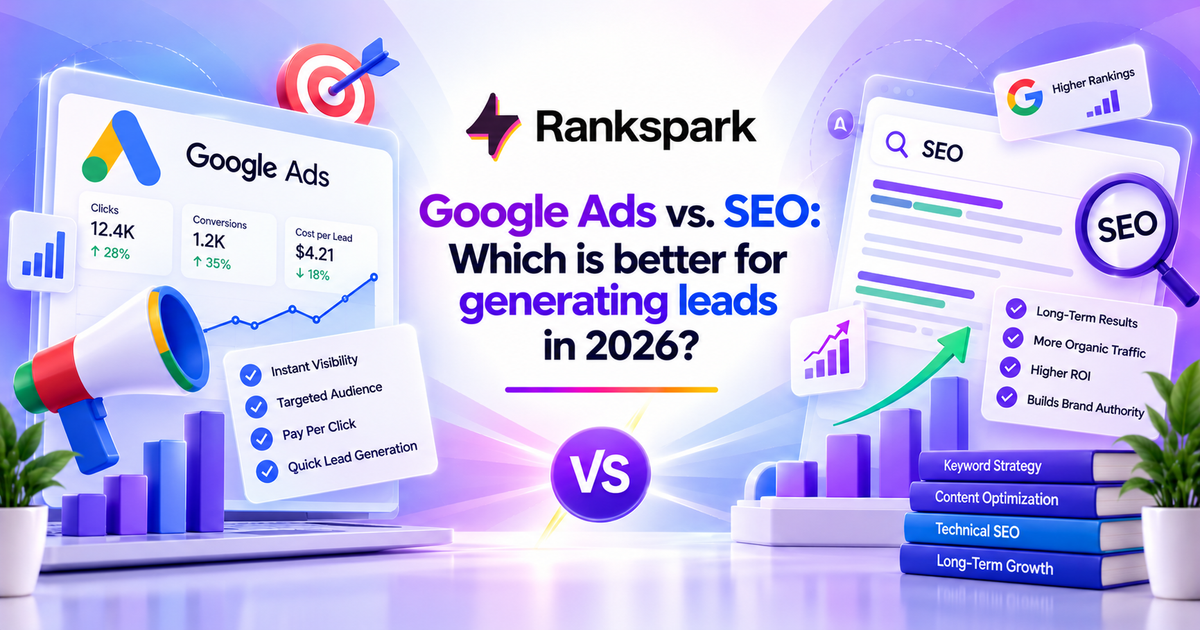
Acquiring quality leads is critical for companies investing in digital marketing. Through Google Ads, companies can connect with their prospective customers fast via paid search ads; meanwhile, SEO provides the company with an organic presence that will help the firm acquire leads in the long run. Both methods can benefit a company's success; however, they differ in cost, speed, longevity, and targeting.
Quick answer
Google Ads is always more effective when it comes to lead generation in the short term because companies can capitalize on related searches and kick off their campaign without having to wait for better organic rankings. SEO will always be more effective in establishing sustainable organic visibility and reducing dependency on pay-per-click in the long run. No marketing channel can ensure quality leads and conversions. The combination of both can work well for some firms.
What is the difference between Google Ads and SEO?
Google Ads and SEO can both make companies visible in search results, but they do so in a completely different way.
Google Ads is a paid service that makes it possible to create advertisements of sponsored listings to be shown for certain search terms. Usually, businesses pay when a visitor clicks on an ad in a search campaign, but prices vary depending on campaign and bidding type.
In turn, SEO deals with enhancing search visibility by optimizing technical aspects of websites, producing valuable content, choosing the right keywords, internal links, etc. No payment is made to Google for organic traffic, but SEO does involve expenditures on strategy, content creation, expertise, etc.
The key difference is the way how visibility is gained. Google Ads can bring visibility instantly after starting certain campaigns, whereas SEO takes time and effort to achieve desired results.
Why does lead generation matter when choosing a marketing channel?
Generating leads is not only about driving more traffic to your website. What you need is to attract potential customers.
Thus, for instance, the software provider that works in the B2B market could be interested in generating demo requests, and the service-providing firm could give priority to making phone calls and requests for quotes. The ecommerce firms could concentrate on sales rather than leads.
Choosing the right channel is a matter of your conversion goals, target audience, sales funnel, and budget. You have to evaluate the number of qualified leads, conversion rate, cost per lead, and revenue contribution of your efforts.
Google Ads vs. SEO: Which generates leads faster?
Google Ads normally wins on speed. Provided the ad has been approved and is ready to run, it can go live on relevant search queries.
Therefore, the use of paid search is a great tool for new companies, product launches, seasonal campaigns, and campaigns where there are immediate lead targets. But still, the performance depends on keyword competition, bidding, relevancy, quality of the landing page, and budget.
SEO usually takes more time since search engines should first discover, crawl, index, and analyze website pages. But still, the timeframe varies depending on the competition, website state, quality of content, and authority.
The company that needs leads quickly can focus on paid search but develop SEO at the same time.
What are the benefits of Google Ads for lead generation?
Google Ads gives businesses direct control over many aspects of their advertising campaigns. Advertisers can select relevant keywords, define geographic targeting, set budgets, test ad copy, and measure conversions.
Key benefits include:
- Faster campaign activation: Reach potential customers without waiting for organic rankings to improve.
- Intent-based targeting: Show ads to users searching for relevant products or services.
- Budget flexibility: Set campaign budgets and adjust bids based on performance.
- Measurable results: Track conversions, cost per lead, and other campaign metrics.
- Testing opportunities: Compare keywords, messaging, offers, and landing pages to identify what attracts qualified prospects.
Businesses can also use PPC services to manage campaign structure, keyword selection, bidding, conversion tracking, and ongoing optimization.
However, paid visibility depends on continued investment. If campaigns stop running, the traffic generated by those ads generally stops as well. Poor targeting or weak landing pages can also consume budget without producing enough qualified leads.
What are the benefits of SEO for lead generation?
SEO helps businesses attract potential customers through unpaid search results. By targeting relevant search intent and improving website quality, businesses can build visibility for the questions, services, and solutions their audiences are looking for.
Important benefits include:
- Long-term visibility: Well-performing pages can continue attracting organic visitors after publication and optimization.
- Reduced dependence on paid clicks: Organic traffic does not incur a direct charge from Google for each click.
- Trust and credibility: Useful, relevant content can help prospects evaluate a business before contacting it.
- Broader keyword coverage: A website can attract visitors across informational, commercial, and transactional searches.
- Compounding opportunities: Existing content can be updated, expanded, and internally linked to support additional search visibility.
For businesses that need ongoing optimization and implementation, managed seo services can help coordinate technical SEO, content development, on-page improvements, and performance monitoring.
SEO still requires investment, and organic visibility can fluctuate with competition, search updates, and changes in user behavior. Results are not guaranteed, but a well-managed strategy can support sustainable lead generation over time.
Google Ads vs. SEO: Which is more cost-effective in 2026?
The best cost-efficient channel would depend on the cost that a company uses to get a good-quality lead as well as the value of such a lead.
Google Ads include media costs, and competitive keywords can be very costly. Also, companies might end up paying for clicks that do not yield conversions because of poor targeting, messaging, or landing pages.
SEO involves spending money on research, technical optimization, content, and other processes. While there will be no charge from Google for the organic clicks, all the efforts put into getting and keeping ranks would have a price tag.
A good comparison would involve taking into account cost per qualified lead, lead conversion ratio, customer acquisition cost, and revenue.
For instance, Google Ads could provide quick leads at a higher cost, while SEO would require more time to start bringing traffic, but would keep providing it. The best choice would be the one that provides profitable customers in a reasonable period of time.
How should USA businesses choose between Google Ads and SEO?
For businesses targeting customers in the USA, the decision should reflect the market's competition, service area, customer search behavior, and sales cycle.
Local service businesses may use Google Ads to reach people searching for urgent services in specific cities. SEO can support local visibility through optimized service pages, useful location-specific content, and a well-maintained Google Business Profile where eligible.
B2B companies with longer sales cycles may benefit from SEO content that answers detailed buyer questions, alongside paid campaigns targeting high-intent searches. Businesses serving multiple states may also need separate strategies for local and national search demand.
When evaluating performance marketing services, check whether the provider connects campaign activity with qualified leads, conversion tracking, and business outcomes rather than focusing only on impressions and clicks.
Businesses should also account for landing page quality, sales follow-up, and the time needed to convert prospects into customers. These factors can influence results as much as the marketing channel itself.
When should you choose Google Ads over SEO?
Google Ads may be the stronger initial choice when your business needs immediate visibility or wants to test demand before making a larger long-term investment.
Consider prioritizing Google Ads when:
- You need leads for an upcoming launch, event, or seasonal campaign.
- You operate in a competitive market where organic visibility is still limited.
- You want to test commercial keywords and customer messaging.
- You have a clear budget and a reliable way to track conversions.
- You need to generate demand while your SEO strategy develops.
Paid campaigns work best when keywords, ad copy, landing pages, and conversion tracking are aligned. Without these foundations, spending more may not improve lead quality.
When should you choose SEO over Google Ads?
SEO may be the stronger priority when your business wants to build lasting organic visibility and attract relevant visitors across a broad range of searches.
Consider prioritizing SEO when:
- You want to reduce reliance on paid advertising over time.
- Your audience researches products or services before making a decision.
- You can invest in useful content and technical improvements consistently.
- Your website has opportunities to rank for relevant informational and commercial keywords.
- You want to build a long-term acquisition channel that supports multiple customer journeys.
Businesses comparing great seo companies should review their technical expertise, content strategy, reporting practices, and ability to connect organic search performance with qualified leads and revenue.
SEO is not a quick fix, but consistent improvements can help a website become a more effective source of organic demand.
Should you combine Google Ads and SEO for better lead generation?
For many businesses, combining Google Ads and SEO is a practical way to balance immediate results with long-term growth.
Google Ads can help identify high-intent keywords, test offers, and reveal which landing pages convert visitors. SEO can use these insights to prioritize relevant service pages, create supporting content, and improve organic visibility for valuable searches.
The two channels can also support different stages of the buying journey. Paid search may capture people ready to contact a provider, while organic content can answer questions and help prospects compare solutions before making a decision.
A combined strategy should have a shared measurement framework. Track leads by channel, assess their quality, and compare conversion rates and acquisition costs. Avoid treating every click or form submission as equally valuable.
When comparing providers offering best-rated seo services, look for a clear plan that aligns SEO with paid search, conversion optimization, and measurable business objectives.
How can you measure which channel generates better leads?
Use consistent conversion tracking to compare Google Ads and SEO fairly. Both channels should be evaluated using the same business goals and lead-quality criteria.
Track these metrics:
- Qualified leads: How many enquiries match your target customer profile?
- Cost per lead: How much does it cost to generate each lead through the channel?
- Lead conversion rate: What percentage of visitors complete a desired action?
- Lead-to-customer rate: How many leads become paying customers?
- Customer acquisition cost: What does it cost to acquire a customer, including relevant marketing and sales expenses?
- Revenue contribution: How much revenue can be attributed to each channel?
Use analytics, advertising conversion tracking, and CRM data where available. For businesses with longer sales cycles, measure performance beyond the initial form submission or phone call.
The goal is to understand which channel produces valuable customers, not simply which channel generates the most traffic.
What are common mistakes when comparing Google Ads and SEO?
Businesses can make poor marketing decisions when they compare the channels using incomplete data or unrealistic expectations.
Expecting SEO to produce immediate leads
Organic search visibility takes time to develop. Businesses that need immediate demand should consider paid campaigns while building their organic strategy.
Judging Google Ads by clicks alone
A campaign can generate clicks without producing qualified enquiries. Review search terms, targeting, landing pages, and conversion data to identify wasted spend.
Ignoring conversion tracking
Without accurate tracking, it is difficult to determine which keywords, campaigns, and pages generate leads that matter.
Choosing one channel without considering business goals
The right mix depends on budget, competition, urgency, sales cycle, and available resources. A channel that works for one company may not suit another.
Failing to optimize landing pages
Even relevant traffic can fail to convert when pages are slow, unclear, difficult to navigate, or missing a compelling next step.
Conclusion
Both Google Ads and SEO can help you create qualified leads, but they work differently. Google Ads works well for companies that require quicker visibility and want to test their market as soon as possible. On the other hand, SEO will be more beneficial when it comes to creating visibility in the long run and driving relevant traffic through it. In most cases, businesses use both of these marketing tools together to have a good balance of acquiring potential customers. You should compare Google Ads and SEO based on qualified leads, customer acquisition cost, conversions, and revenue, not only traffic.
Contact RankSpark to generate more qualified leads with SEO and PPC.
Frequently asked questions
1. Is Google Ads better than SEO for lead generation?
Google Ads can generate leads faster, while SEO can build sustainable organic visibility over time.
2. Is SEO cheaper than Google Ads?
SEO avoids direct charges for organic clicks, but it still requires investment in content, technical work, and ongoing optimization.
3. How long does SEO take to generate leads?
The timeline varies depending on competition, website condition, content quality, and the effectiveness of the SEO strategy.
4. How quickly can Google Ads generate leads?
Google Ads can start generating leads soon after a campaign becomes eligible to serve, depending on targeting, budget, and conversion performance.
5. Should small businesses use Google Ads or SEO?
Small businesses should choose based on their budget, urgency, local competition, and ability to invest in long-term organic growth.
6. Can Google Ads and SEO work together?
Yes, Google Ads can capture immediate demand while SEO builds organic visibility and supports long-term lead generation.
7. How do I measure lead-generation success?
Track qualified leads, cost per lead, conversion rates, customer acquisition cost, and revenue from each channel.