

Most eCommerce brands don’t fail at SEO because they ignore it.
They fail because they misunderstand what SEO actually is.
A large percentage of online stores invest in content, optimize product pages, install SEO apps, publish blogs, and chase rankings for months — sometimes years — without generating meaningful organic growth. Traffic stagnates. Product pages never rank competitively. Customer acquisition costs continue rising. Paid ads carry the business while organic search remains inconsistent and unpredictable.
Then eventually, SEO gets labeled as “slow,” “overrated,” or “not working.”
But the issue usually isn’t SEO itself.
The issue is that most e-commerce SEO strategies were built for an older version of search.
The search environment in 2026 is fundamentally different from what it was even three years ago. AI-generated search experiences, conversational discovery, semantic search systems, and entity-based rankings have reshaped how visibility works online. Traditional optimization tactics alone are no longer enough.
Modern eCommerce SEO requires a combination of:
Technical infrastructure, semantic relevance, AI retrieval optimization, conversion-focused content, authority building, and behavioral understanding.
Most brands only focus on one or two of those layers.
That’s why they plateau.
The biggest SEO problem most e-commerce brands never notice
The majority of e-commerce stores are structurally invisible long before they become algorithmically invisible.
This is one of the most overlooked realities in modern SEO.
Brands often assume they have an SEO problem because rankings are weak. But in many cases, the real issue begins deeper inside the website architecture itself.
Poor category structures, duplicate collections, thin product pages, disconnected internal linking, bloated JavaScript, faceted navigation errors, indexing conflicts, and weak semantic hierarchy quietly damage visibility before content strategy even enters the conversation.
AI-driven search systems are especially sensitive to structural clarity because machines interpret websites differently than humans do.
A customer may still navigate a confusing store manually.
AI retrieval systems often cannot.
That distinction matters enormously in 2026.
Modern search systems rely heavily on:crawl efficiency, semantic relationships, contextual architecture, entity mapping, and information hierarchy to understand websites properly.
When those systems encounter fragmented structures, visibility weakens.
Not because the products are bad.
Because the site becomes difficult to interpret algorithmically.
Why product pages rarely rank competitively
One of the most common frustrations eCommerce brands face is product pages failing to rank despite targeting high-intent keywords.
The reason is usually simple:
Most product pages add almost no unique informational value.
Thousands of stores often use identical manufacturer descriptions, repetitive specifications, generic metadata, and thin content structures. From Google’s perspective, there’s very little reason to prioritize one version over another.
AI-driven search systems intensified this issue.
Search engines increasingly reward:
Contextual completeness, informational usefulness, unique expertise, semantic depth, and intent satisfaction, rather than basic keyword optimization.
That means product pages now need to function as decision-support assets — not just transactional listings.
The highest-performing eCommerce pages in 2026 typically include:
Buyer guidance, comparison insights, FAQs, use cases, educational context, trust signals, rich media, semantic relevance, and strong topical relationships.
The brands winning organic visibility understand something critical:
Modern SEO is not just about helping search engines understand products.
It’s about helping users make decisions confidently.
Most e-commerce content strategies are still built incorrectly
Many brands still treat content marketing as a disconnected blogging exercise.
They publish random articles targeting broad keywords with little connection to actual customer journeys.
Traffic may increase temporarily, but conversions remain weak because the content ecosystem lacks strategic intent alignment.
This is one reason so many eCommerce blogs generate visitors without generating revenue.
The content attracts curiosity instead of purchase intent.
AI-driven SEO strategies approach content differently.
Instead of publishing isolated blogs, they build interconnected authority ecosystems where every piece of content supports:search visibility, customer education, topical authority, internal linking, and commercial relevance simultaneously.
In practical terms, this means:category pages support informational content, informational content strengthens product discovery, comparison content improves conversion intent, and semantic relationships reinforce overall authority.
Search systems increasingly reward these interconnected structures because they demonstrate genuine topical expertise instead of surface-level keyword targeting.
Why AI search is reshaping e-commerce SEO completely
AI-generated search experiences changed how people shop online.
Consumers increasingly ask conversational questions before visiting stores:
“What’s the best standing desk for small apartments?”“Which protein powder is easiest to digest?”“What’s the safest cookware for induction stoves?”
These are no longer traditional keyword searches.
They are contextual decision queries.
Platforms like ChatGPT, Gemini, Perplexity, and Google AI Overviews increasingly influence purchasing decisions before users ever land on product pages.
That means e-commerce SEO now extends beyond traditional SERPs.
Brands need visibility inside:
AI-generated recommendations, conversational summaries, comparative evaluations, and semantic retrieval systems.
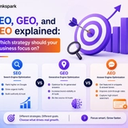
This is where Generative Engine Optimization (GEO) becomes critical.
GEO focuses on structuring content and authority signals so AI systems can retrieve, trust, and reference your information effectively.
Traditional SEO optimized for rankings.
GEO optimizes for AI interpretation.
And the brands adapting early are building enormous visibility advantages.
The hidden cost of over-reliance on paid ads
Many e-commerce brands compensate for weak SEO by increasing ad spend.
At first, it works.
Revenue grows quickly through Meta Ads, Google Shopping, TikTok campaigns, and paid search acquisition.
But over time, customer acquisition costs increase while margins shrink.
Without strong organic visibility, brands become dependent on paid traffic for survival.
That creates fragile growth systems.
The strongest eCommerce businesses use SEO to reduce acquisition pressure over time.
Organic visibility compounds.
Paid traffic resets every month.
AI-driven SEO strategies strengthen long-term profitability because they build discoverability assets that continue generating visibility beyond ad budgets.
This doesn’t mean paid ads are ineffective.
In fact, the best-performing eCommerce brands integrate SEO and paid media aggressively.
But they use paid campaigns to amplify authority — not replace it.
Why AI-driven SEO performs better than traditional SEO
The phrase “AI-driven SEO” is often misunderstood.
It does not mean publishing thousands of AI-written blog posts.
That strategy is already failing across competitive industries.
AI-driven SEO means using artificial intelligence, semantic systems, and behavioral analysis to create smarter optimization strategies.
The strongest AI-driven SEO frameworks typically focus on:
Search intent modeling, entity relationships, semantic clustering, predictive content mapping, internal linking optimization, AI retrieval readiness, and conversion-focused information architecture.
In other words:
AI helps improve strategic precision.
It doesn’t replace expertise.
This distinction matters because the internet is already saturated with generic AI-generated content. Search systems increasingly filter low-value material aggressively.
The brands succeeding in 2026 combine:
Human expertise, technical SEO, semantic architecture, behavioral understanding, and AI-assisted optimization into one integrated strategy.
That’s where real competitive advantage exists.
Technical SEO has become more important, not less
A surprising number of e-commerce brands still treat technical SEO as optional.
It isn’t.
Especially in AI-driven search environments.
Large eCommerce websites naturally create technical complexity:
Pagination, filtering systems, faceted URLs, duplicate variations, crawl inefficiencies, orphan pages, index bloat, rendering issues, and structured data inconsistencies.
Without technical clarity, search engines waste resources crawling low-value pages while high-value content receives insufficient attention.
AI systems amplify these issues because retrieval models depend heavily on structured organization.
In 2026, technical SEO will increasingly influence:
AI discoverability, semantic interpretation, contextual understanding, and retrieval confidence.
The brands dominating organic visibility today usually have:
Clean architecture, strong schema implementation, optimized crawl management, semantic HTML structures, and disciplined indexing systems.
Technical SEO is no longer just a maintenance function.
It’s now part of visibility engineering.
Why brand authority now matters more than keywords
Search engines increasingly evaluate entities instead of isolated pages.
That means brand trust has become a major ranking advantage.
When AI systems repeatedly encounter your business associated with:
Expertise, consistency, authority, and positive contextual relationships improve visibility across multiple search environments.
This is why digital PR, authoritative mentions, reviews, citations, creator collaborations, and industry positioning now influence SEO performance much more than many brands realize.
Strong brands rank more easily because search systems trust them more confidently.
Weak brands often rely heavily on exact-match optimization because they lack broader authority signals.
The future of e-commerce SEO belongs to brands building recognition, not just rankings.
How RankSpark fixes e-commerce SEO problems
At RankSpark, we approach eCommerce SEO differently because modern search requires integrated systems, not isolated tactics.
We don’t focus only on rankings.
We focus on visibility, discoverability, authority, conversion efficiency, and long-term acquisition stability.
Our approach combines:
Technical SEO, AI-driven search optimization, semantic architecture, GEO strategy, conversion-focused content systems, internal linking frameworks, and performance marketing alignment.
We optimize stores not just for Google rankings, but for:
AI retrieval systems, conversational discovery, user decision-making, and scalable organic growth.
Because the future of eCommerce SEO isn’t about gaming algorithms.
It’s about becoming the most trustworthy, useful, and contextually relevant brand in your category.
And the brands that understand that shift early will dominate the next era of digital commerce.
Ready to improve your eCommerce visibility with AI-driven SEO strategies? Explore RankSpark SEO Services or connect with RankSpark to build a scalable organic growth system.
Author Bio: append to published article
Haniel Singh is the Founder and CEO of RankSpark, an AI-driven SEO and performance marketing agency specializing in eCommerce SEO, GEO optimization, technical SEO, and scalable digital growth systems. Since 2012, Haniel has helped brands improve organic visibility, reduce acquisition costs, and build future-ready search strategies designed for AI-driven discovery platforms.
Grow your eCommerce brand with RankSpark.
Frequently Asked Questions
1. Why do most e-commerce brands struggle with SEO?
Most brands struggle because they rely on outdated SEO tactics, weak site structures, thin product content, and disconnected content strategies that fail to align with modern AI-driven search systems.
2. What is AI-driven SEO for eCommerce?
AI-driven SEO uses semantic analysis, search intent modeling, entity optimization, technical structure, and AI retrieval strategies to improve organic visibility and customer acquisition.
3. Is blogging still important for eCommerce SEO?
Yes, but only when content supports customer intent, topical authority, and internal discovery systems. Random blog publishing without a strategic structure usually produces weak ROI.
4. How does AI search affect online stores?
AI search platforms increasingly influence buying decisions before users visit websites. Brands need optimized content and authority signals that AI systems can retrieve and trust.
5. Are paid ads enough for e-commerce growth?
Paid ads can scale revenue quickly, but relying entirely on paid acquisition increases long-term risk and customer acquisition costs. Strong SEO creates sustainable organic visibility.
6. What’s the biggest SEO trend for e-commerce in 2026?
The biggest shift is the movement toward AI-driven discoverability, entity authority, semantic search optimization, and integrated SEO + GEO strategies.